SMC / BMC Polyester Mould Production
Heated, wear resistant compression moulds for glass fibre reinforced composite parts.
Overview
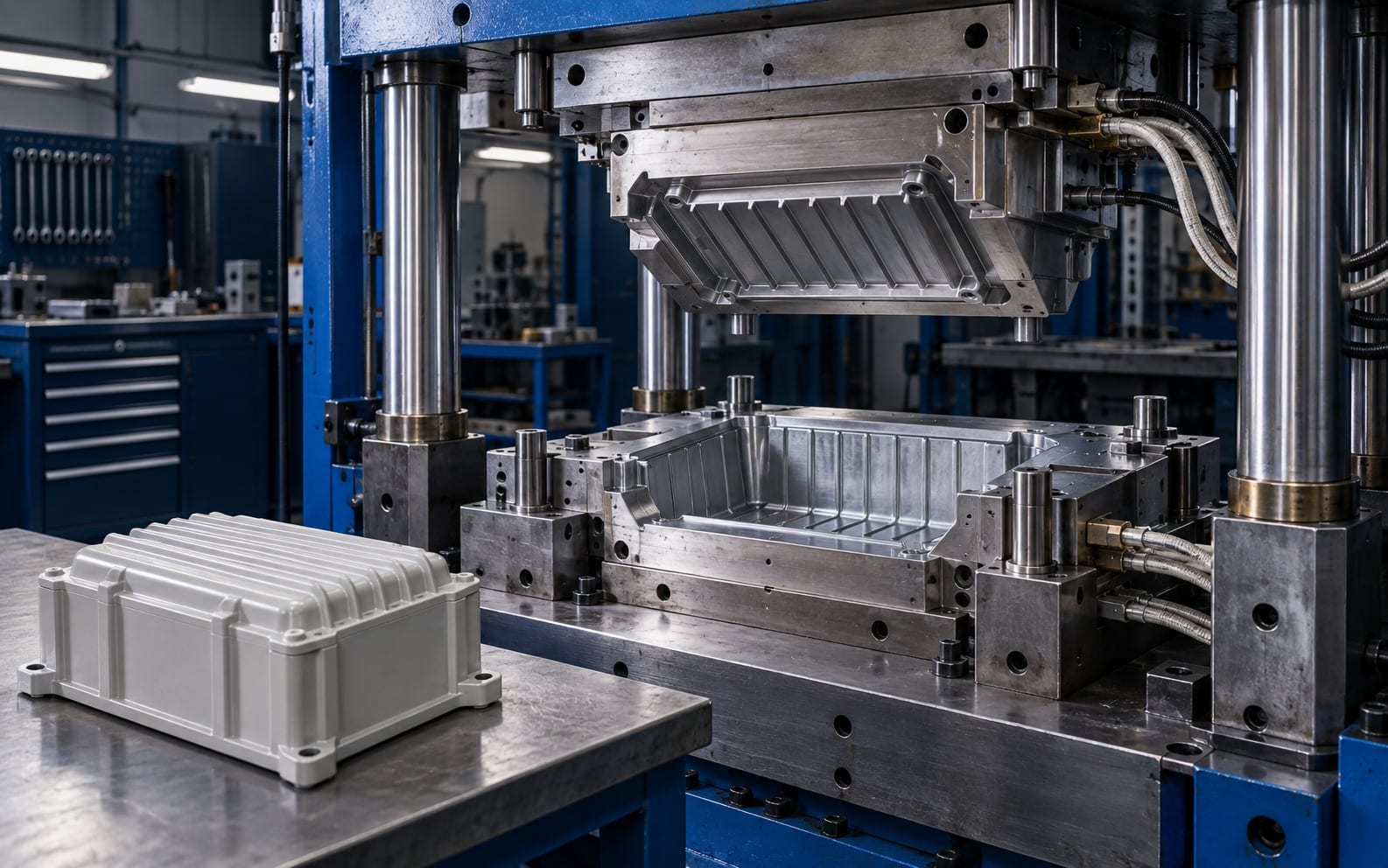
SMC and BMC tooling works by compressing an abrasive compound inside a heated mould. Because the glass fibre reinforcement continuously erodes the tool surface, steel selection and surface treatment are what determine tool life.
High hardness steel and suitable coatings are used on moulding surfaces. Runners and overflow channels are positioned so the compound spreads evenly; uneven filling disturbs fibre orientation and reduces mechanical strength.
Heating channels are laid out to give a homogeneous surface temperature. Temperature differences change the cure rate and therefore cause deviations in surface quality and dimensions.
SMC and BMC are widely chosen for applications requiring insulation and weather resistance, such as electrical distribution equipment, lighting housings and outdoor enclosures.
How we proceed
- Step 01
Part analysis
Wall thickness, fibre orientation and strength requirements are assessed.
- Step 02
Mould design
Runners, overflow channels and the heating layout are designed.
- Step 03
Material selection
Steel grade and surface treatment are chosen for wear resistance.
- Step 04
Manufacturing
The mould is machined and heating elements and sensor pockets prepared.
- Step 05
Trial pressing
A sample is pressed and the tool delivered after surface and dimensional checks.