Product Design
From concept to manufacturable engineering: 3D modelling, material selection and design for manufacturing.
Overview
Most of a product cost is decided at the design stage. We treat product design not as a drawing exercise but as an engineering process in which manufacturing method, material and assembly constraints are solved together.
We start by clarifying functional requirements, operating conditions and target production volume. These three inputs drive every later decision, from material to manufacturing method; without a volume figure the right tooling or process cannot be chosen.
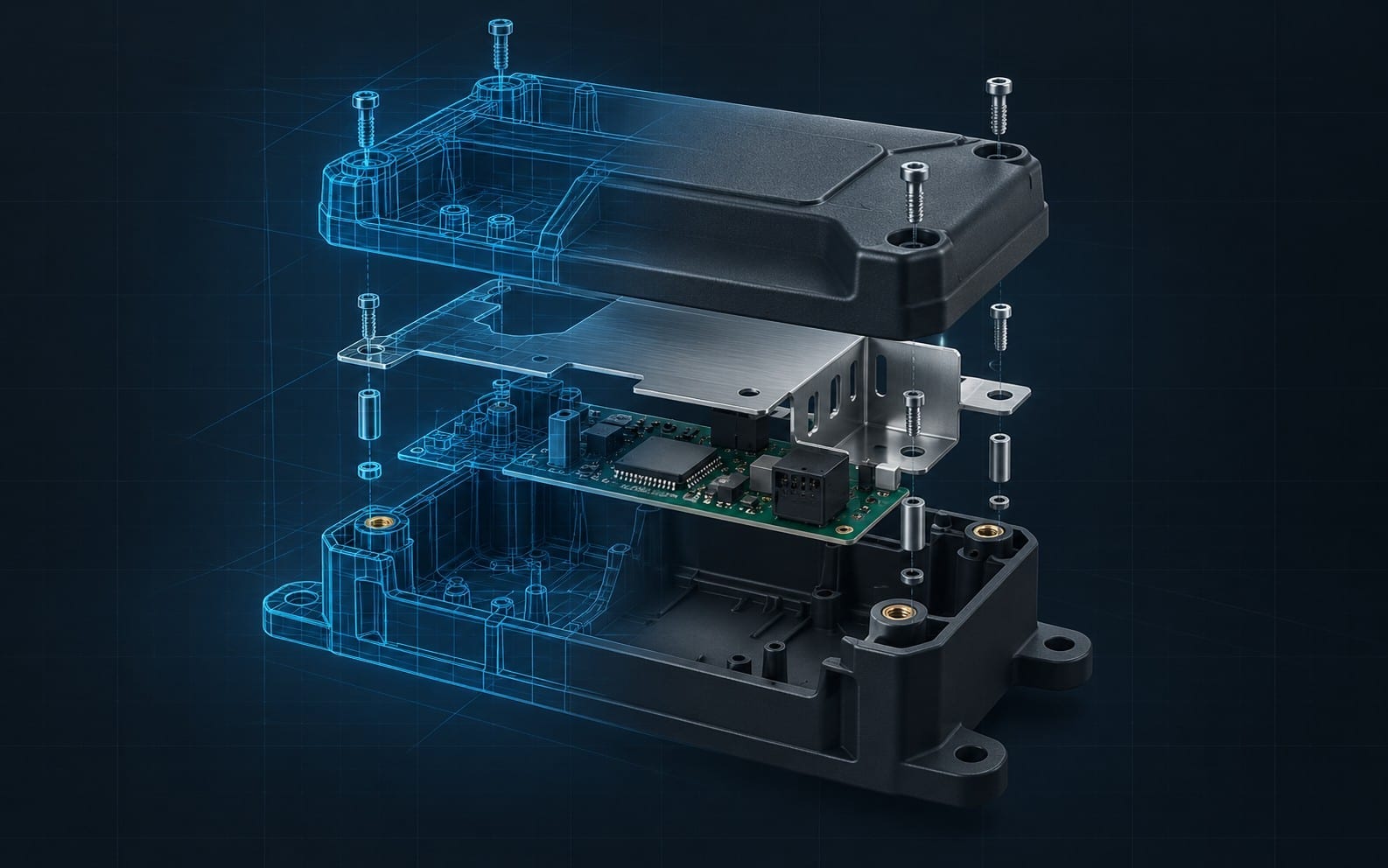
During 3D modelling the design is reviewed for manufacturability (DFM): wall thickness distribution, draft angles, radii, warpage risk and assembly tolerances are all checked before any tool is cut. This prevents the expensive revisions that otherwise surface once the mould already exists.
The work is completed with a production-ready drawing set, material and surface finish definitions, and a validation prototype where required.
How we proceed
- Step 01
Requirement analysis
Function, operating environment, load conditions and target volume are defined.
- Step 02
Concept and material
Alternative solutions are evaluated and a material suited to the process is selected.
- Step 03
3D modelling
The solid model is built; wall thickness and draft angles are set for manufacturing.
- Step 04
Validation
A prototype is produced where needed and fit and function are verified.
- Step 05
Documentation
Manufacturing drawings, tolerances and surface specifications are delivered.