Industrial Automation
We automate repetitive production steps where the gain can be measured, not assumed.
Overview
Automation is not always the right investment. Before automating a step we measure its cycle time, error rate and labour cost, and set out in figures how long the investment takes to pay back.
Work starts by collecting data on the existing line. No automation decision is made before it is clear which station is the bottleneck, why stoppages occur and where scrap is generated.
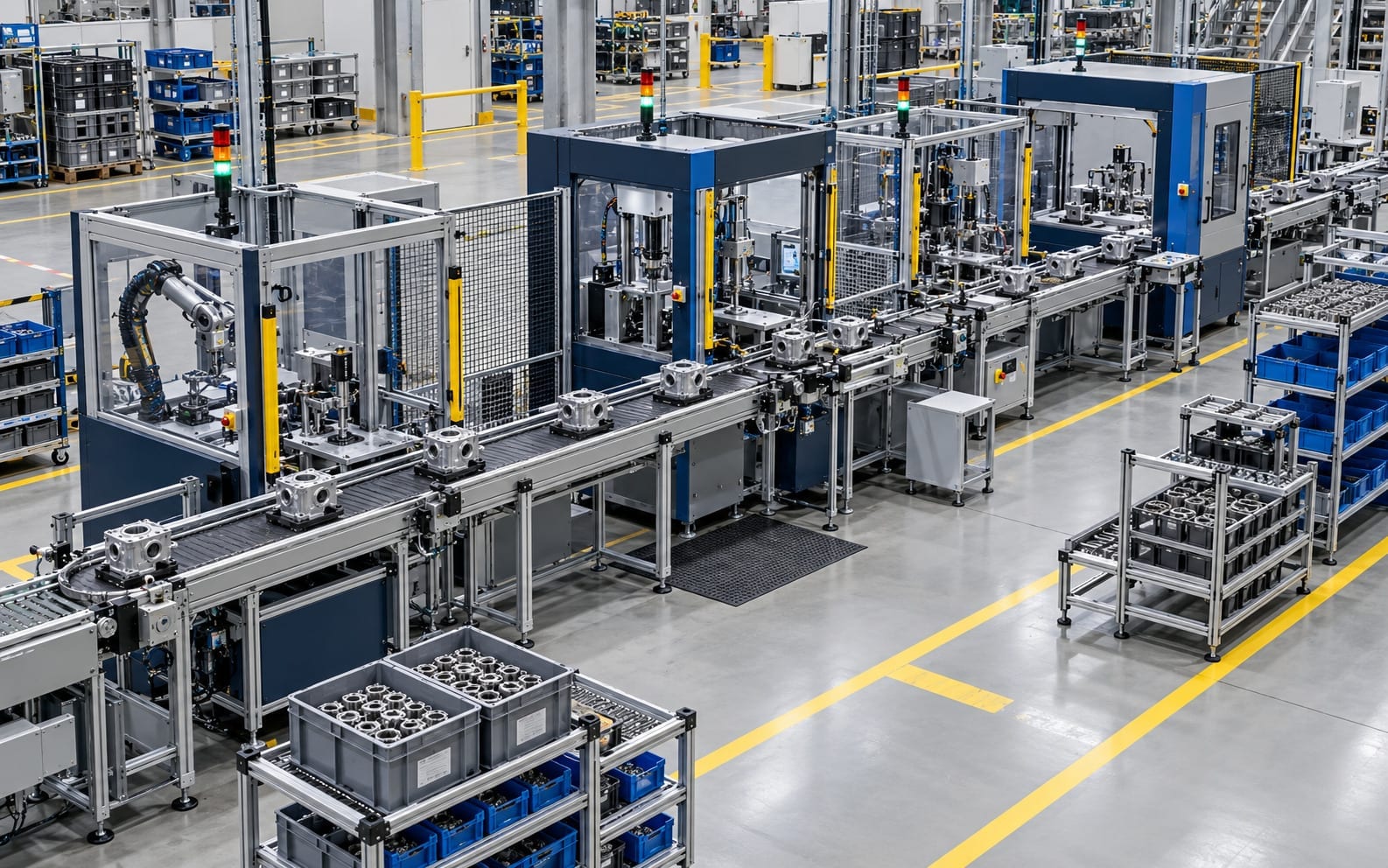
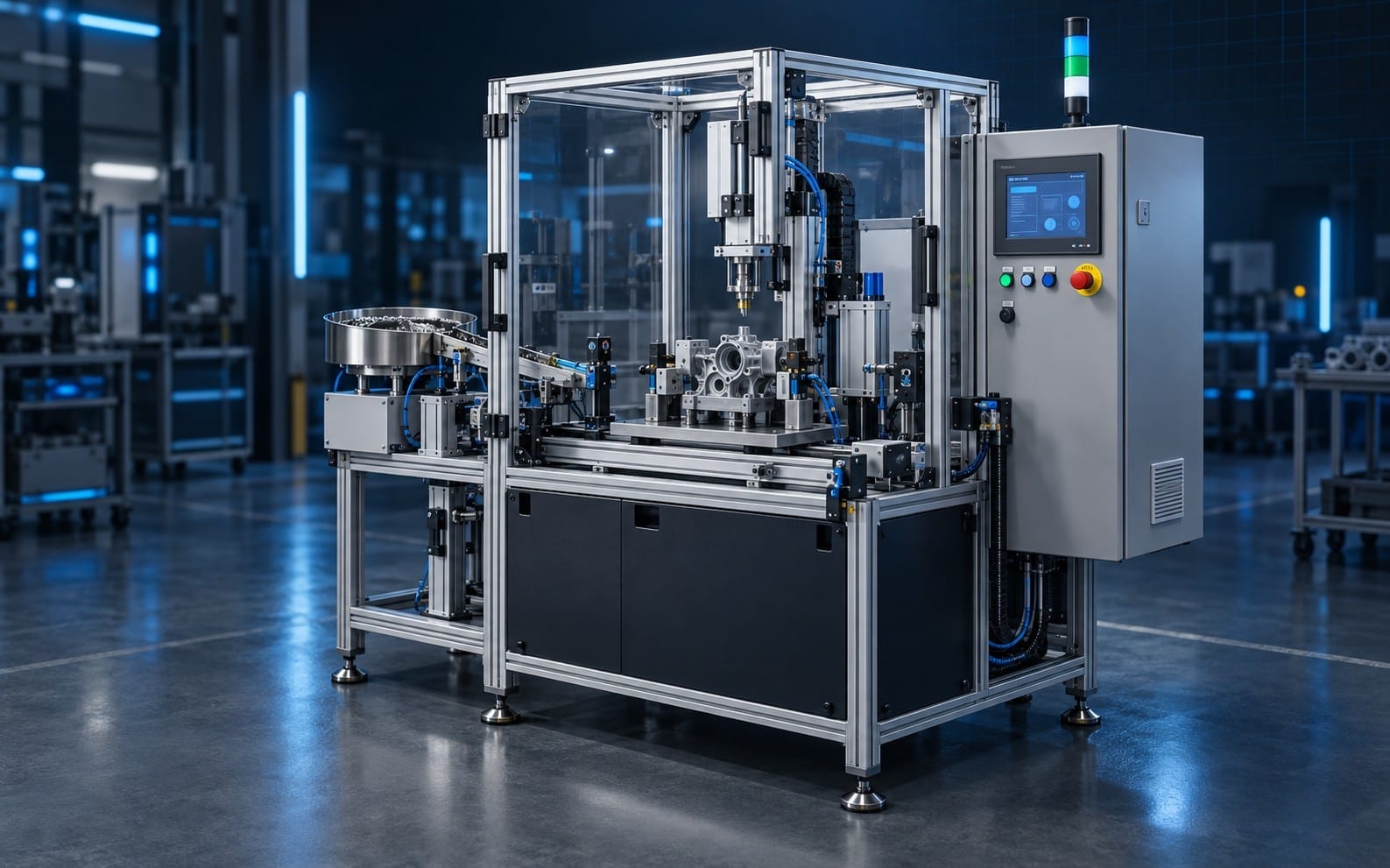
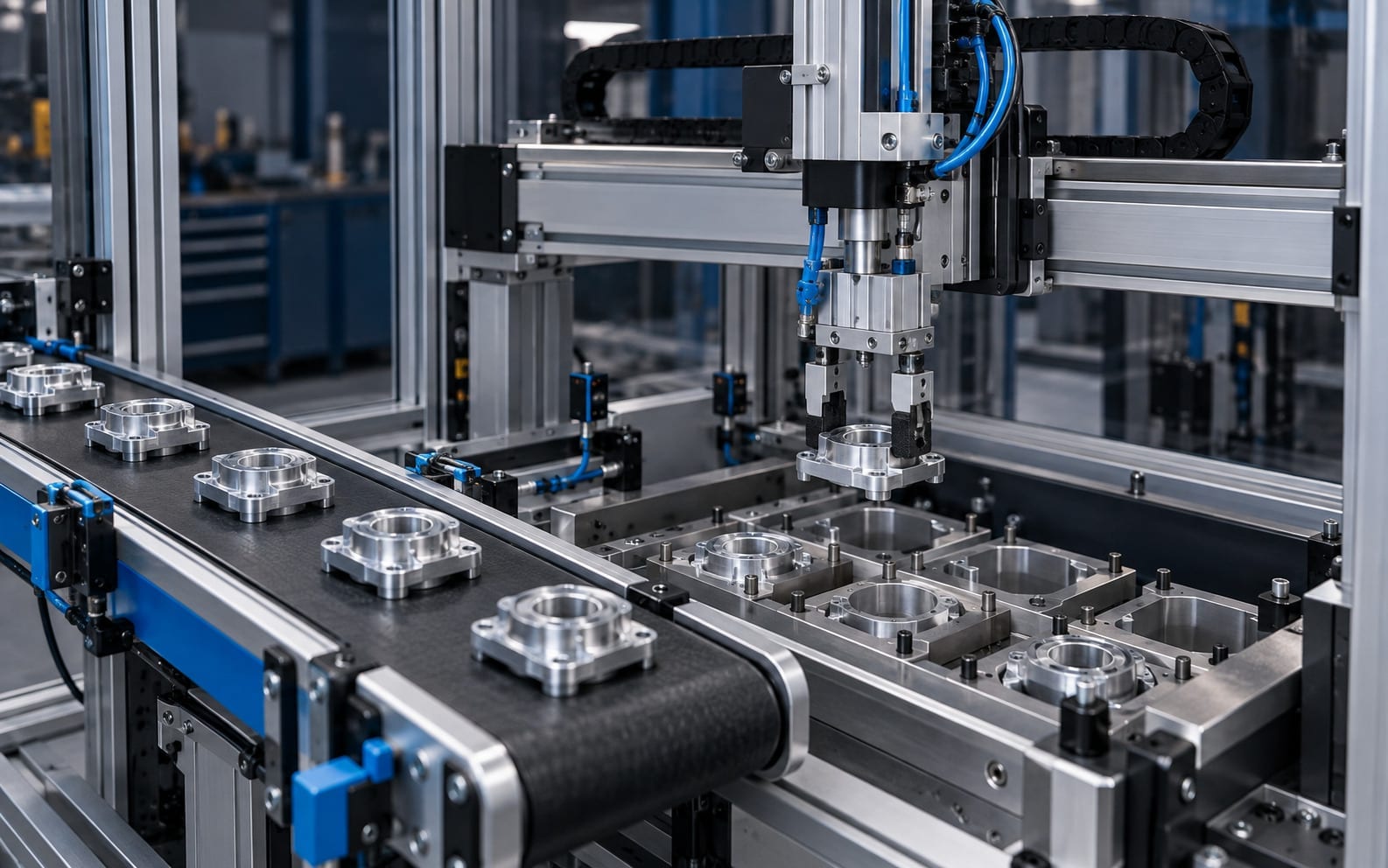
Scope covers feeding and orientation units, pneumatic and servo driven motion systems, sensor based control and PLC logic. Where an operator must remain, the division of work between human and machine is designed around ergonomics.
After commissioning, line performance is measured again. The success of the automation is judged by comparing data from before and after installation.
How we proceed
- Step 01
Data collection
Cycle time, stoppage causes and scrap rate are measured on site.
- Step 02
Feasibility
The expected gain and payback period of automation are calculated.
- Step 03
System design
Mechanical, pneumatic, electrical and control logic are designed together.
- Step 04
Installation
The system is manufactured, installed on site and commissioned.
- Step 05
Verification
Post-installation performance is measured and compared with the baseline.