Sheet Metal Die Manufacturing
Blanking, bending, deep drawing and progressive dies, from design through commissioning.
Overview
Success in sheet metal tooling begins with correctly predicting springback. Two grades of the same thickness produce different angles in the same die, which is why we design tooling against the material certificate.
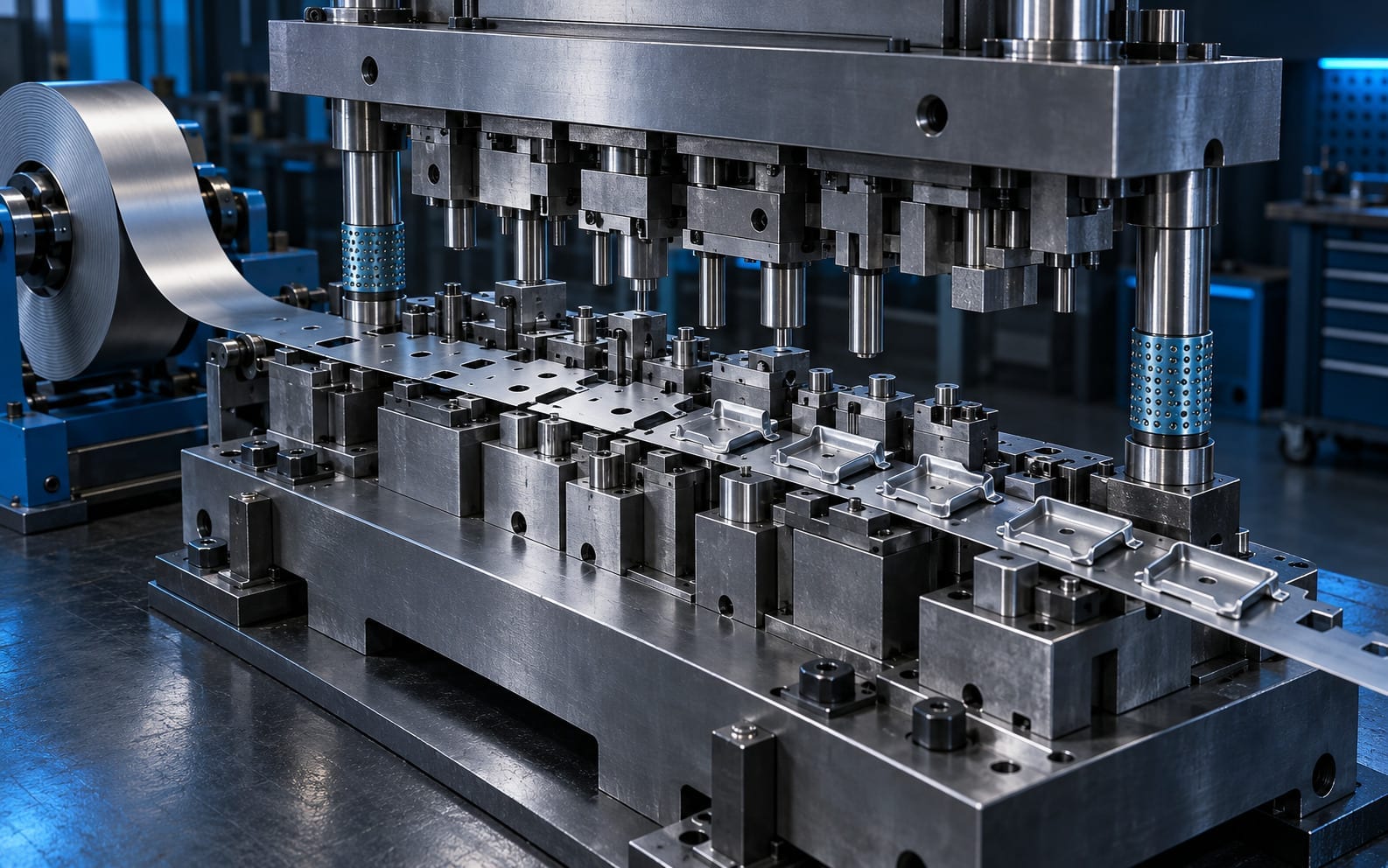
Production volume determines the die type. At low volumes separate blanking and bending dies are economical; at high volumes a progressive die substantially reduces both cycle time and labour per part.
Flat pattern calculation, springback compensation, cutting clearance and strip layout are the critical design topics. Strip layout also governs scrap rate and therefore feeds straight into material cost.
Appropriate steel and hardening processes are selected for wear surfaces, and cutting elements are designed to be removable for straightforward maintenance.
How we proceed
- Step 01
Part and material analysis
Sheet grade, thickness and springback behaviour are evaluated.
- Step 02
Flat pattern and strip layout
The blank is developed and a layout that minimises scrap is designed.
- Step 03
Die design
Cutting clearances, bend radii and die type are determined.
- Step 04
Manufacture and hardening
Elements are machined and wear surfaces heat treated.
- Step 05
Trial and adjustment
Samples are produced and the die is commissioned after dimensional checks.